
Is It Really a Buyer's Market in 2026? What the Data Actually Shows Investors

If you've been waiting for the market to tip in your favor, the data suggests something is shifting, just not as dramatically or as uniformly as the headlines might suggest.
With 30-year mortgage rates sitting near a one-year high, according to Freddie Mac, conventional buyers are more payment-sensitive than they've been in years. That's changing seller behavior, inventory levels, and how much leverage investors actually have at the negotiating table.
Here's what the numbers say, and what they mean for your next acquisition.
Inventory Is Rising, But Slowly
The most important shift in 2026 isn't a single dramatic headline. It's a gradual rebalancing after years of extremely tight supply.
Active listings have climbed noticeably compared to a year ago, and by the end of March, eleven states (including Texas, Florida, Colorado, and Arizona) had already pushed inventory back above pre-pandemic 2019 levels, according to ResiClub's state-by-state inventory analysis. But the pace of that recovery has slowed considerably. Inventory growth that was running near 30% annually a year ago has cooled to a much more modest pace more recently, meaning the market is normalizing, not flooding.
What this means for investors: more inventory means more time to evaluate deals and less pressure to overbid, but it's not the wide-open buyer's market some are expecting. Supply is still tighter than historical norms in most markets, even as it improves.
Sellers Are Stuck, And That's Keeping a Lid on Supply
The biggest constraint on inventory right now isn't demand. It's what economists call the "lock-in effect."
Millions of homeowners are sitting on mortgage rates in the 2%-4% range from the pandemic era, and selling now means giving that up for something much higher, a trade-off documented in the spring 2026 housing trends coverage.
That hesitation shows up clearly in the data: new listings actually declined about 7.6% year-over-year even as overall inventory rose, per the same Realtor.com report, meaning the supply growth is coming more from homes sitting on the market longer than from a wave of new sellers.
What this means for investors: the sellers who are listing right now are often the ones who have to: job relocations, life events, distressed situations, or investors exiting a position. That's exactly the kind of motivated-seller pool where off-market and direct-to-seller strategies can find real opportunity.
Price Cuts Are Becoming the Norm, Not the Exception
One in five listings carried a price reduction in July, according to Realtor.com's July 2026 Monthly Housing Trends Report, and that share has been climbing back toward last year's pace after running below it for most of the spring. National median list prices have now fallen year-over-year for nine straight months, the same report shows.
This isn't a crash. It's sellers adjusting expectations to match what buyers can actually afford at today's rates. In some markets, that adjustment has gone further than others: HousingWire's analysis of 2026 metro-level data found Austin price cuts approaching 45% of listings, while stronger-performing metros like Houston are still clearing inventory efficiently even with elevated markdowns.
What this means for investors: pricing softness varies enormously by metro and even by submarket. A market-level headline about "rising inventory" or "falling prices" tells you far less than pulling the actual absorption rate and price-cut data for your specific target area.
Homes Aren't Sitting Much Longer: Buyers Haven't Disappeared
Here's the part that complicates the "buyer's market" narrative: homes spent a median of 57 days on the market in July, according to Realtor.com's July housing report, actually one day less than a year ago, the first year-over-year decline in time-on-market in over two years, after 26 straight months of homes taking longer to sell.
Pending sales have now grown year-over-year for eight consecutive months, though that momentum has cooled from over 4% growth in the spring to closer to 1% most recently, per the same report.
What this means for investors: buyers haven't vanished; they've just become more selective. Properly priced properties are still moving at a reasonable pace. This is a market that rewards realistic pricing on both sides of a deal, not one where you can assume every seller is desperate.
So, Buyer's Market or Not?
The honest answer is: it depends heavily on where you're buying, and what "buyer's market" means to you.
If you're looking at overall leverage in negotiating price, conditions have shifted in buyers' favor compared to the extreme seller's markets of recent years. Price cuts are up, and sellers are adjusting expectations.
If you're looking at sheer volume of available inventory, supply is still historically tight in most areas, even with the recent improvement.
If you're looking at competition for well-priced deals, it hasn't disappeared: pending sales are still growing, meaning good deals still move fast.
For investors, the practical takeaway is this: the market is rewarding operators who move fast on realistically priced deals and who understand their specific submarket's absorption trends, rather than those waiting for a broad, uniform buyer's market to arrive.
With supply still constrained by rate-locked sellers, the deals that do come to market, especially distressed, off-market, or motivated-seller situations, are worth moving on quickly.
Financing Speed Matters More in This Environment
In a market where good deals still move quickly, and pricing windows can close fast, the speed of your financing can be the difference between winning a deal and watching it go to someone else.
Whether you're securing a DSCR loan on a rental acquisition or lining up fix-and-flip capital before a competing offer comes in, having financing ready to move the moment the right opportunity appears matters more than ever.
Frequently Asked Questions
Is 2026 a buyer's market for real estate investors?
Why is housing inventory rising so slowly in 2026?
Are home prices actually falling in 2026?
Are homes taking longer to sell right now?
What's the best strategy for investors in this market?
Related Posts
View all Market Insight →
What the 2021-2022 Buying Spree Got Wrong (And Replacement Cost Would Have Caught)
Institutional real estate investors who bought heavily in 2021-2022 often underwrote deals using IRR models and compressed cap rates that assumed cheap refinancing and aggressive rent growth would continue indefinitely. When interest rates rose and rent growth slowed, those assumptions broke down, and many of the same buyers became net sellers. Replacement cost, the cost to build a comparable property today, would have flagged those deals as overpriced regardless of interest rate assumptions, since it depends only on current land and construction costs rather than forecasts. As of 2024, construction costs made up a record 64.4% of a new home's average sales price in the U.S., according to the National Association of Home Builders, making replacement cost an increasingly useful underwriting benchmark for investors in 2026.
October 5, 2026

The DSCR Dividend: How One Lending Product Changed the Game for Real Estate Investors and Communities
DSCR loans have reshaped real estate investing by giving investors a dependable refinance-to-rental exit. The DSCR Dividend examines data from Baltimore and markets nationwide to test whether DSCR lending encouraged more renovations, reduced the risk of challenging deals, and contributed to broader changes in vacant housing and homeownership.
September 29, 2026
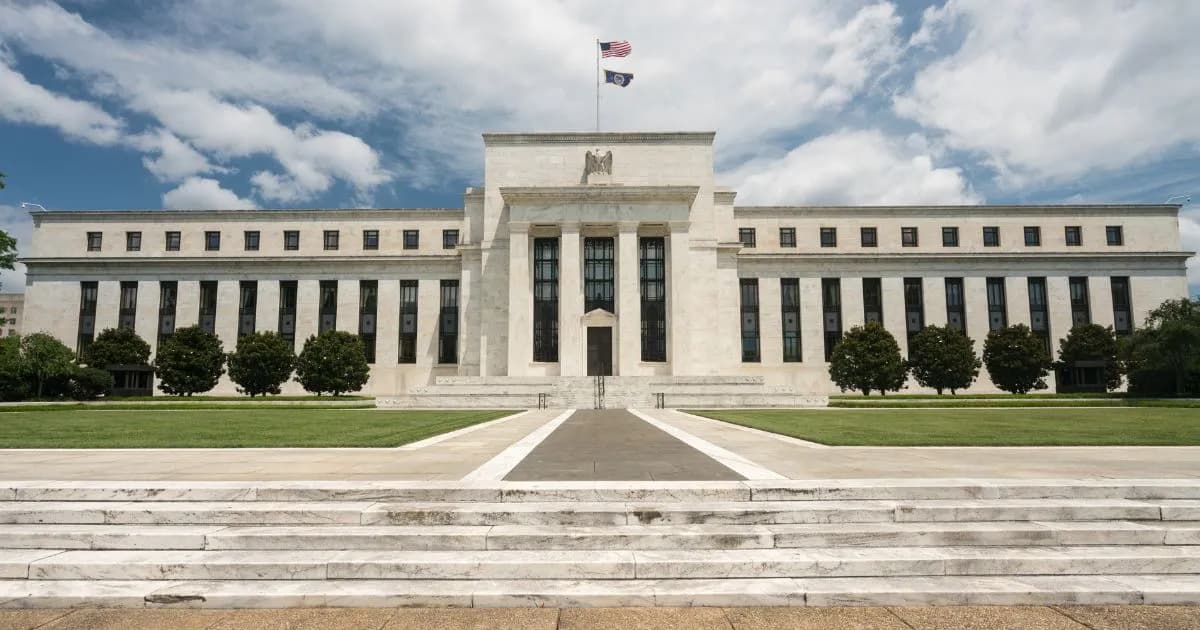
The Fed Raised Rates for the First Time Since 2023. Here's What It Means for Your Next Deal
On September 16, 2026, the Federal Reserve raised the federal funds rate by 25 basis points to a target range of 3.75%-4.00%, its first hike since 2023, citing a strong economy and elevated inflation. Mortgage rates have already risen in response. For real estate investors, this means financing costs may stay elevated longer than expected, making speed, deal structure, and lender reliability more important. Dominion Financial offers DSCR rental and fix and flip loans with in-house underwriting designed to close quickly and deliver on quoted terms in shifting rate environments.
September 17, 2026