
The Fed Raised Rates for the First Time Since 2023. Here's What It Means for Your Next Deal
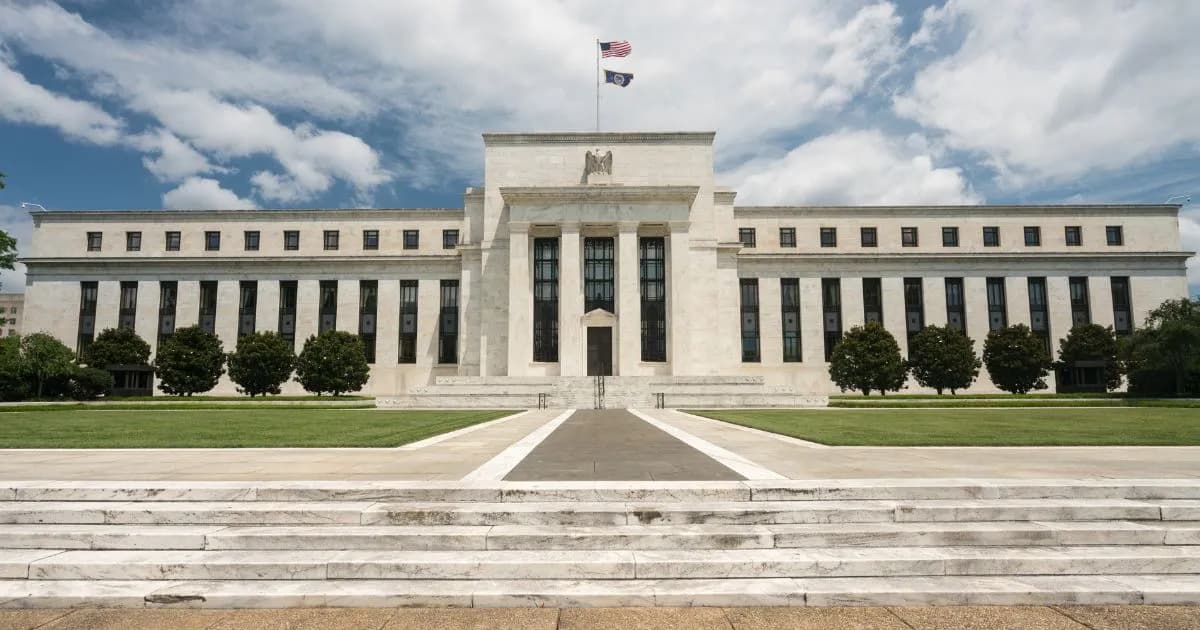
On September 16, 2026, the Federal Open Market Committee raised the federal funds rate by a quarter point, moving the target range to 3.75%-4.00%. It's the Fed's first rate increase in more than three years, and it marks a shift after a period of rate cuts that many real estate investors had gotten used to.
Here's what happened, why it happened, and what it may mean for your financing strategy going forward.
What the Fed Actually Did
The FOMC voted 12-0 to raise rates by 25 basis points. In its official statement, the committee cited a solid economy as the basis for the decision: steady economic growth, resilient consumer spending, strong productivity, and a labor market that has kept pace with the workforce. At the same time, the committee noted that inflation remains elevated, partly due to rising oil prices, and said the rate increase is intended to support a more timely return to its 2% inflation goal.
The Fed also raised the interest rate paid on reserve balances and the primary credit rate, effective September 17, 2026, according to the Board's implementation note.
In his press conference, Fed Chair Kevin Warsh said inflation has remained above target for some time and that the committee wants confidence that it is moving toward that target at an appropriate pace. He also indicated that additional rate increases are possible if incoming data continues to show a strong economy alongside persistent inflation.
Context Worth Knowing
This decision drew public commentary from multiple directions, including from the White House Council of Economic Advisers, reflecting the reality that Fed policy decisions are often debated across the political spectrum. The Fed operates independently of the administration in setting monetary policy, and its stated basis for this decision was economic data on growth, employment, and inflation.
What's Already Moving
Borrowing costs have already responded. The 30-year fixed mortgage rate has climbed to around 7.19%, more than a full percentage point higher than a year ago. If your underwriting assumed rates would ease later this year, this move runs counter to that expectation, at least for now.
You can also see where Fed officials expect policy to head from here in the committee's own economic projections, released alongside the rate decision.
What This Means for Real Estate Investors
1. Financing costs may stay elevated longer than expected. If your deal underwriting assumed rate relief later this year, it's worth stress-testing those numbers against a higher-for-longer rate environment. On fix and flip deals especially, where holding costs eat into margin every extra week a project sits unsold or un-refinanced, that assumption is worth revisiting now rather than at closing.
2. Speed matters more in a rising-rate environment. Every extra week spent in a slow underwriting process is a week of additional rate exposure. This is where a non-bank lender built for speed makes a real difference: Dominion Financial's in-house underwriting is designed to keep fix-and-flip and DSCR rental loans moving toward closing in days, not months.
3. Deal structure matters as much as the rate itself. Rather than waiting for a better rate that may not materialize, it helps to structure deals that work at today's cost of capital: disciplined loan-to-cost assumptions, realistic exit strategies, and a financing partner who can walk through the numbers with you directly. Our team works one-on-one with investors to structure DSCR and fix and flip loans around the deal in front of them, not a one-size-fits-all box.
4. Reliability matters more when the environment is shifting. In a market where rates and underwriting standards can move between the day you get pre-qualified and the day you're ready to close, a lender who delivers on the timeline they stated is worth more than it might have been a year ago. That consistency is something we build every DSCR and fix and flip loan around.
5. Keep an eye on labor market and inflation data. The Fed explicitly tied this decision to labor market strength and elevated inflation. If either shifts meaningfully, that could change the outlook for future rate decisions. It's worth watching the data ahead of the next FOMC meeting.
6. Demand patterns may vary across price points. Economists have noted a widening gap in financial outcomes between higher- and lower-income households since the pandemic. For investors, that's worth factoring into market-level analysis, since demand for workforce housing and affordable rentals may behave differently than demand for higher-end product as this trend continues.
The Bottom Line
The rate environment has shifted, at least for now, and it's worth revisiting your underwriting assumptions in light of it. In moments like this, speed, service, and reliability from your lending partner matter as much as the rate on the term sheet. Whether you're financing a fix and flip project or a DSCR rental, Dominion Financial's in-house underwriting team is built to move quickly, communicate clearly, and close on what we quote.
If you're evaluating a deal and want to talk through how this changes your numbers, connect with our team. We're here to help you work through the new rate environment with a DSCR loan or fix and flip loan built around your deal.
Frequently Asked Questions
Did the Federal Reserve raise interest rates in September 2026?
Why did the Fed raise rates after a period of cuts?
How does the Fed rate hike affect mortgage and investment property rates?
What should real estate investors do differently in a higher-rate environment?
How can Dominion Financial help investors navigate this rate environment?
Related Posts
View all Market Insight →
What the 21st Century ROAD to Housing Act Means for Institutional Investors
Signed into law in July 2026, the 21st Century ROAD to Housing Act restricts institutional investors controlling 350 or more single-family homes from making additional purchases, effective January 7, 2027. The law does not require divestiture of existing holdings and applies only to future acquisitions. Exceptions remain available for build-to-rent programs, renovate-to-rent projects, foreclosure transactions, and purchases from other qualifying investors. Investors below the 350-home threshold, including most smaller and mid-sized investors, are not affected by the restriction.
August 31, 2026
Is It Really a Buyer's Market in 2026? What the Data Actually Shows Investors
The 2026 housing market shows mixed signals rather than a clear-cut buyer's market. Inventory is rising but growth has slowed sharply from last year's pace, and while some states have surpassed pre-pandemic supply levels, most remain historically tight. The "lock-in effect" (homeowners holding onto low pandemic-era mortgage rates) is suppressing new listings even as overall inventory climbs, meaning today's sellers are often more motivated (relocation, distress, life events). Price cuts are increasingly common and median list prices have declined for nine consecutive months, though the extent varies widely by metro. Notably, homes are selling slightly faster than a year ago and pending sales keep growing, showing buyer demand hasn't disappeared. For investors, the takeaway is that leverage has improved but success now depends on submarket-level analysis and moving quickly on realistically priced or off-market deals, backed by fast, ready financing such as DSCR loans or fix-and-flip capital.
August 19, 2026
As Institutional Buyers Retreat, Individual Investors Gain Ground
Institutional investors pulled back hard in early 2026, with purchases falling 6% year over year to their lowest level since 2020. At the same time, the new ROAD Act capped how many existing homes large institutions can buy. Fewer big buyers competing for the same inventory is opening room for individual investors, and the resale gains they are capturing actually improved. Here's what the pullback means for rental, fix and flip, and construction investors, and why it's a more selective market rather than an all clear.
July 31, 2026