
What the 2021-2022 Buying Spree Got Wrong (And Replacement Cost Would Have Caught)
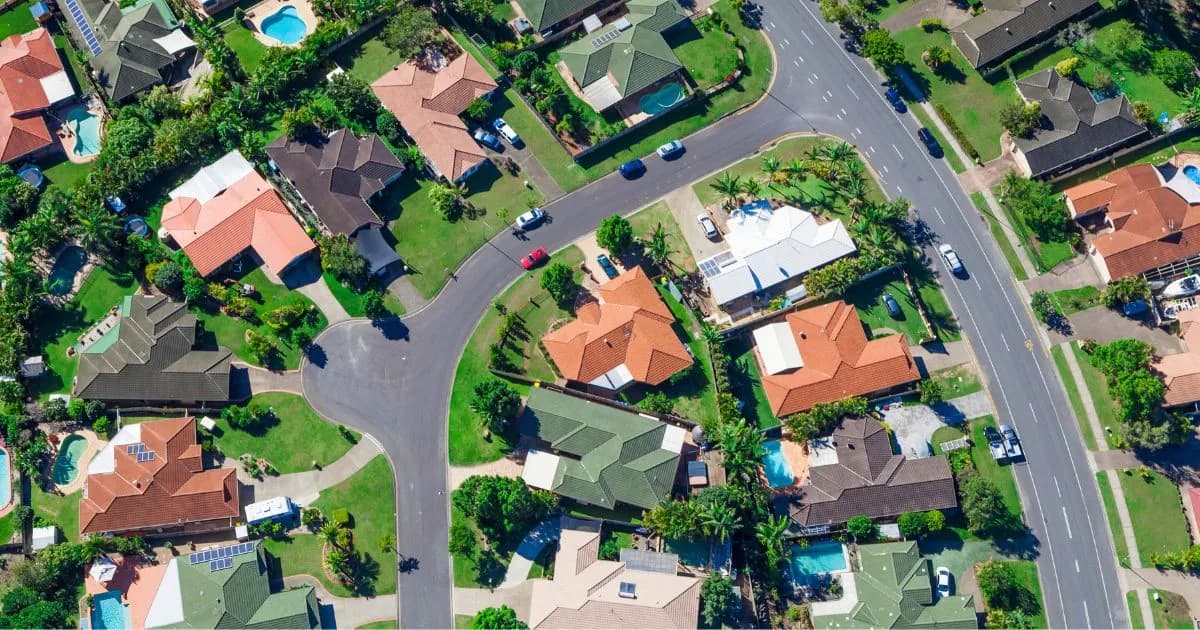
Ask ten investors how they underwrite a deal, and you'll get ten spreadsheets: discounted cash flow models, IRR waterfalls, exit cap assumptions, sensitivity tables. Somewhere along the way, buying a rental house started to look like underwriting a private equity fund.
Quick refresher if you need one. IRR (internal rate of return) is the annualized return a deal is projected to generate over the whole hold, accounting for when money goes in and comes out. Cap rate is a property's projected first-year income divided by its price, a shorthand for comparing deals. Both are fine tools. Both also depend on guesses about the future: what rent does next year, what a buyer will pay for the building in five years. Nudge those guesses and the "right" price moves a lot, even though the building itself hasn't changed at all.
The investors who've actually made money across a few cycles tend to fall back on something much dumber: don't pay more for a property than it would cost to build it, brand new, today. That's replacement cost; if the concept is new to you, we cover the basics in our guide to buying below replacement cost. What we want to get into here is what happened when a lot of very sophisticated buyers ignored it, and what the current numbers say about who's making that same mistake right now.
The 2021-2022 Buying Spree, In Hindsight
During the near-zero-rate stretch of 2021-2022, a wave of institutional capital paid prices that only worked if two things stayed true forever: cheap refinancing and aggressive rent growth. Neither did. Buyers underwrote 3-4% annual rent bumps into perpetuity and assumed they could refinance out of bridge debt into permanent financing at rates that no longer exist.
The IRR models justified almost any price, because IRR models can be made to justify almost any price. Push the exit cap rate down half a point, stretch the rent growth assumption another year, and a deal that doesn't work suddenly does on paper. None of that changes what the building is actually worth to replace. A lot of those same buyers are the ones selling now, at prices below what they paid, because the spreadsheet was never the thing protecting them.
Nobody who anchored to replacement cost instead of an IRR target got fooled by artificially cheap money the same way, because replacement cost doesn't care what the 10-year Treasury is doing. It only moves when the actual cost of dirt, lumber, labor, and permits moves.
What the Numbers Say Right Now
That ceiling has been climbing fast, and it's worth knowing exactly how fast before you underwrite your next deal. Per the National Association of Home Builders' 2024 Cost of Construction Survey, construction made up 64.4% of a new home's average sales price in 2024, a record since the survey started in 1998, up from 60.8% just two years before. On an average home priced around $665,000, construction alone runs about $428,000, before land is even in the picture. Broader 2026 estimates put new construction at $150–$280 per square foot depending on region and finish, according to Buildermuse's 2026 cost breakdown.
Builder profit margins in that same NAHB survey averaged 11%. That's the real cushion a builder needs to break ground on anything. Below that, new supply simply doesn't get built, which is exactly why a property priced under replacement cost carries so little risk of getting undercut by a wave of brand-new competition.
Why This Cuts Deeper in an Oversupplied Market
Oversupply feels like the wrong time to buy. Vacancy's up, concessions are everywhere, rents are heading the wrong direction. It's also exactly the phase where an IRR model tends to lie to you, because every input: rent growth, absorption timeline, exit pricing is pointed the wrong way, and it's tempting to just wait.
But oversupply fixes itself. Falling rents and rising concessions squeeze builder margins until construction stops penciling, new starts slow, and the existing glut gets absorbed by ordinary population and job growth. At some point supply and demand cross again and rents recover. An IRR model built on today's soft rent comps will miss that turn every time, because it's extrapolating the current trend instead of pricing the replacement floor underneath it.
Buying below replacement cost during that unloved stretch is how patient investors get ahead of the recovery, instead of waiting for a spreadsheet to tell them rent growth has already returned, by which point the discount is gone.
A Sharper Way to Underwrite
Before you build the full IRR model, run this cheaper gut check first:
Price the land per lot or per unit locally.
Apply a regional construction cost per square foot (NAHB and local builder associations publish these annually).
Layer in soft costs: permitting, financing, builder overhead and profit (that 11% margin figure is a reasonable floor).
Compare the total to your acquisition price.
If your IRR model and your replacement-cost math disagree, trust the replacement cost number. It's the one that isn't relying on a guess about where rents or exit multiples land three or five years from now.
Financing to Move When You Find It
Finding a deal priced below replacement cost is only step one. Step two is having financing fast enough to actually close it. Dominion Financial's fix & flip loans fund up to 100% of purchase and rehab, skip the appraisal, and close in as little as 48 hours.
Planning to hold instead of flip? Dominion Financial's DSCR rental loans qualify based on the property's cash flow, not your personal income, with 30-year fixed terms.
Frequently Asked Questions
Why did institutional investors overpay during 2021-2022?
How is replacement cost different from an IRR or cap rate model?
What's a reasonable builder profit margin to assume when estimating replacement cost?
What happens if a property is priced above replacement cost?
Does replacement cost work the same way for multifamily as it does for single-family homes?
Related Posts
View all Market Insight →
The DSCR Dividend: How One Lending Product Changed the Game for Real Estate Investors and Communities
DSCR loans have reshaped real estate investing by giving investors a dependable refinance-to-rental exit. The DSCR Dividend examines data from Baltimore and markets nationwide to test whether DSCR lending encouraged more renovations, reduced the risk of challenging deals, and contributed to broader changes in vacant housing and homeownership.
September 29, 2026
The Fed Raised Rates for the First Time Since 2023. Here's What It Means for Your Next Deal
On September 16, 2026, the Federal Reserve raised the federal funds rate by 25 basis points to a target range of 3.75%-4.00%, its first hike since 2023, citing a strong economy and elevated inflation. Mortgage rates have already risen in response. For real estate investors, this means financing costs may stay elevated longer than expected, making speed, deal structure, and lender reliability more important. Dominion Financial offers DSCR rental and fix and flip loans with in-house underwriting designed to close quickly and deliver on quoted terms in shifting rate environments.
September 17, 2026

What the 21st Century ROAD to Housing Act Means for Institutional Investors
Signed into law in July 2026, the 21st Century ROAD to Housing Act restricts institutional investors controlling 350 or more single-family homes from making additional purchases, effective January 7, 2027. The law does not require divestiture of existing holdings and applies only to future acquisitions. Exceptions remain available for build-to-rent programs, renovate-to-rent projects, foreclosure transactions, and purchases from other qualifying investors. Investors below the 350-home threshold, including most smaller and mid-sized investors, are not affected by the restriction.
August 31, 2026