
Revitalizing Baltimore Neighborhoods
Dominion Financial’s Role in the DASH Fund’s Positive Impact on Housing Affordability
Affordable housing and community development are essential elements for fostering vibrant neighborhoods and promoting inclusivity. For instance, in the heart of Baltimore City, an initiative known as the Developing Affordable Starter Homes (DASH) Fund has been making strides toward transforming communities and enhancing the lives of residents. One notable project that models the DASH Fund’s mission is the rehabilitation of 815 Washburn Ave., led by dedicated real estate investors Peter and Rosamon Forbes.
The DASH Fund’s Vision for Baltimore
The DASH Fund launched in 2021 as a public-private partnership focused on revitalizing Baltimore City neighborhoods. It empowers small developers through an innovative loan program designed to drive social and economic growth. The fund prioritizes neighborhood stability, ensuring lasting impacts on local communities. It also advances minority homeownership, opening doors to equitable housing opportunities. Additionally, the DASH Fund creates employment opportunities, fostering economic mobility and growth. This collaborative approach reflects a deep commitment to uplifting Baltimore residents.
Central to the success of the DASH Fund is partnership. Key partners include the National Community Stabilization Trust (NCST), Baltimore City Department of Housing and Community Development (DHCD), Neighborhood Impact Investment Fund (NIIF), and Dominion Financial Services (DFS). This collective effort not only makes the DASH Fund a reality but also drives meaningful change across Baltimore’s communities.
Dominion Financial Services: Empowering Baltimore’s Developers
Dominion Financial Services (DFS) serves as the DASH Fund’s sole loan originator and servicer. Based in Baltimore, DFS leverages its deep understanding of the city. This local connection motivates DFS to support the community’s transformation. Consequently, this local connection motivates DFS to support the community’s transformation. Their work helps turn the DASH Fund’s aspirations into reality.
Furthermore, DFS streamlines the lending pathway for scattered-site single-family developers. Their grasp of Baltimore’s neighborhoods enables them to fast-track the underwriting process, slicing wait times for appraisals and closing procedures. This flexibility materializes in sealing deals within a mere two weeks, with rehabilitation funds dispersed in a quick three business days. For eligible DASH investors, 7% interest awaits on committed loan amounts, alongside a 3% financing fee.
Jack BeVier, Partner at Dominion Financial Services, which is the origination and servicing operations partner of the DASH Fund, underscores their dedication: “Our company values speed and service. These are the core needs for Baltimore City Developers. We want to reduce previous barriers and improve access to capital for small investors, ultimately making the city better.”
The DASH Fund: Empowering Small Developers
The DASH Fund’s impact is felt most deeply by small developers striving to make a difference in Baltimore’s neighborhoods. Applicants must meet specific guidelines to qualify for a DASH Fund loan. They must plan to sell to owner-occupants. Additionally, they need a base in Baltimore City and prior experience in renovation projects.
“The DASH program has been a great tool in assisting local community developers transform once-blighted neighborhoods and streets into those that have the pride of homeownership,” said William Hayes, Loan Officer at Dominion Financial Services, and dedicated representative for the DASH Fund. “There are many skilled laborers that are very capable of renovating a vacant property into a place that a family can call home. However, they may not always have the liquidity to be able to do so without a program like DASH. This program really makes a difference in encouraging local developers who care about the community to do what they do best.”
The terms of DASH Fund loans are designed to empower small developers. With competitive interest rates and favorable loan terms, the DASH Fund offers up to 100% financing of the purchase and rehabilitation costs, while ensuring responsible lending practices are maintained. The fund’s focus on homeownership opportunities underscores its dedication to driving positive change within the city.
815 Washburn Ave.: A Spotlight on Transformation
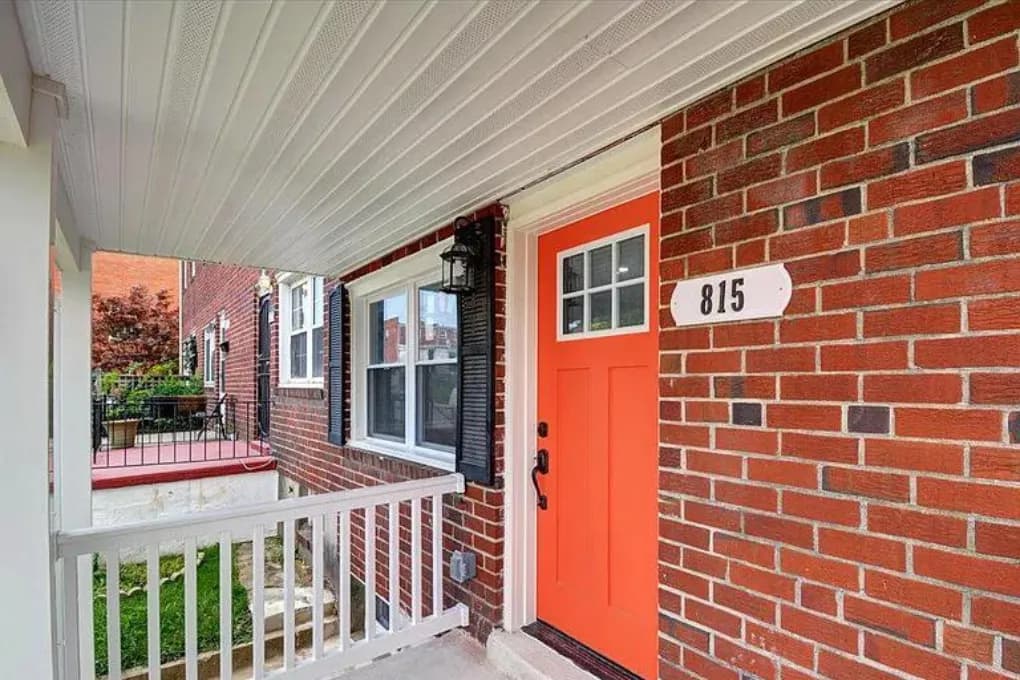
One stand-out project under the DASH Fund’s umbrella is the rehabilitation of 815 Washburn Ave., led by committed real estate investors Peter and Rosamon Forbes. Through their work, the Forbes duo transformed a distressed property into an affordable starter home, contributing to the city’s housing stock and fostering a sense of community. This renovation exemplifies the fund’s mission to revitalize Baltimore’s neighborhoods.
Rosamon Forbes, speaks about the duo’s experience: “(The DASH Fund) is truly outstanding – with a good, low interest rate, it was perfect for our budget. It takes care of everything until the end and benefits the community. Choosing this fund for our area was just the smartest resource move.”
The rehabilitation project of 815 Washburn Ave. led by Peter and Rosamon Forbes serves as a prime example of the positive impact of the DASH Fund. This property, once distressed and neglected, has been transformed into an affordable and inviting starter home. The Forbes duo’s vision aligns perfectly with the DASH Fund’s mission to uplift Baltimore’s neighborhoods and enhance the community’s well-being.
815 Washburn Ave. is a townhouse featuring three bedrooms, two bathrooms, and a generous living space of over 1,500 square feet. The renovation process has elevated the property, with upgrades including a newly finished basement, and additional full bath. The attention to detail extends to the exterior as well, featuring a covered front porch with railings and a rear porch accessible from the kitchen that leads to a rear parking pad. “The neighbors are really enjoying it. It certainly brightens up the neighborhood,” Rosamon stated. “We’re really proud of the work we have put in and the end result.”
Originally purchased for just under $70,000 at auction, the property just sold for an impressive $215,000. This increase in value not only reflects the improved aesthetics and functionality of the home but also showcases the broader positive shift in the neighborhood.
Joining the DASH Movement
For those interested, prospective investors can apply for DASH Fund loans by emailing dashinfo@dashfund.org. Alternatively, they can visit www.dashfund.org for comprehensive information. Affordable housing and community development are becoming urgent priorities worldwide. The DASH Fund serves as a beacon of progress and hope. It fosters transformation through collaborative partnerships and innovative loan frameworks. Dedicated individuals like Peter and Rosamon Forbes drive this impactful initiative. Together, they are reshaping Baltimore’s neighborhoods for future generations.
Related Posts
View all Market Insight →
Migration + Demographics: The Real Estate Thesis Supply Data Can't Replace
Migration and demographic trends determine the long-term demand floor for a real estate market, while supply and absorption data explain shorter-term cyclical price and vacancy swings within that market. According to U.S. Census Bureau estimates, 31 states had positive net domestic migration between July 2024 and June 2025, led by North Carolina (84,000+ net arrivals), Texas (67,300), South Carolina (66,600), and Tennessee (42,000+). Florida's net domestic migration dropped sharply to 22,517 in 2025, down from 310,892 in 2022, reflecting rising property taxes, insurance costs, and home prices eroding its pandemic-era affordability advantage. Meanwhile, the Midwest posted positive net domestic migration for the first time this decade. Investors should evaluate both migration trends and current supply/absorption conditions together, since a market can have strong migration and still be temporarily oversupplied, or weak migration and still be tight due to limited new construction.
October 19, 2026

Why "Normalized" Rates Don't Mean a Normal Housing Market
As of September 2026, the 10-year Treasury yield (near 4.9-5%) and 30-year mortgage rates (around 6.67-6.76%) have returned to ranges considered historically normal by pre-2010 standards. Despite this, U.S. existing-home sales remain historically weak, falling to a seasonally adjusted annual rate of 3.98 million in August 2026, with months' supply climbing to 4.9, the highest level in over a decade, according to the National Association of Realtors. The gap between "normal" rates and a still-frozen transaction market is driven primarily by the mortgage rate lock-in effect: homeowners who bought or refinanced at 2.5-3.5% during 2020-2021 face a strong financial disincentive to sell, since moving means giving up that rate for a new mortgage well above 6%. This lock-in effect unwinds gradually, driven by individual life events rather than rate changes, meaning transaction volume may stay subdued even if rates hold steady or ease modestly.
October 12, 2026
What the 2021-2022 Buying Spree Got Wrong (And Replacement Cost Would Have Caught)
Institutional real estate investors who bought heavily in 2021-2022 often underwrote deals using IRR models and compressed cap rates that assumed cheap refinancing and aggressive rent growth would continue indefinitely. When interest rates rose and rent growth slowed, those assumptions broke down, and many of the same buyers became net sellers. Replacement cost, the cost to build a comparable property today, would have flagged those deals as overpriced regardless of interest rate assumptions, since it depends only on current land and construction costs rather than forecasts. As of 2024, construction costs made up a record 64.4% of a new home's average sales price in the U.S., according to the National Association of Home Builders, making replacement cost an increasingly useful underwriting benchmark for investors in 2026.
October 5, 2026