
Strategic Shifts in Volatile Markets: Why Real Estate Remains a Smart Investment
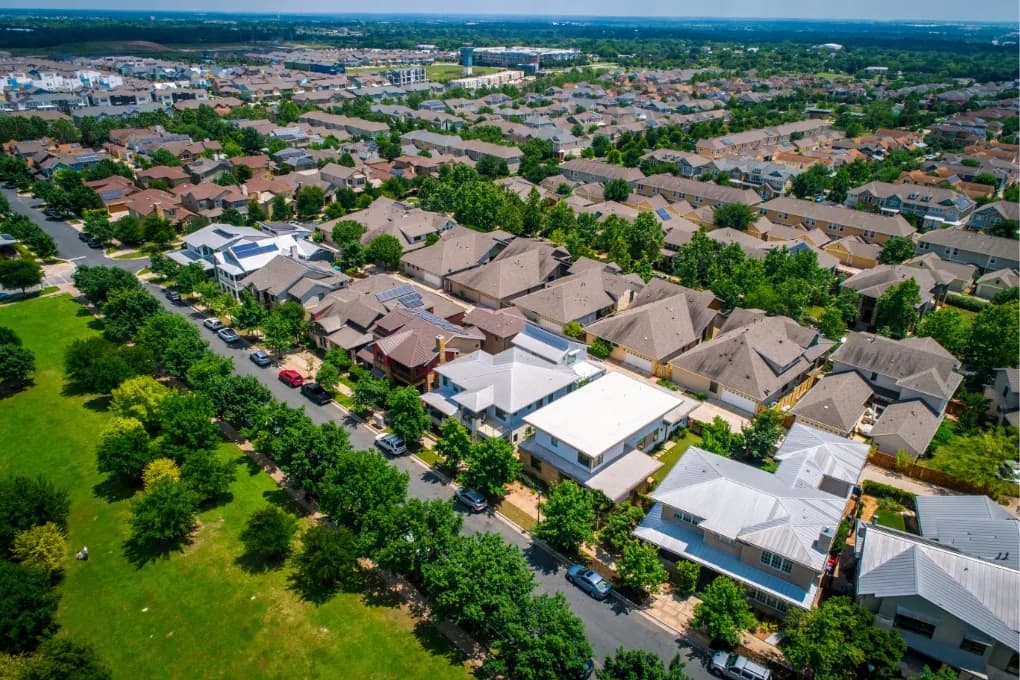
As markets adjust to changing global dynamics, investors are re-evaluating their positions and realigning their portfolios toward more stable, inflation-resistant assets. Among the top performers in this category is U.S. real estate, which continues to demonstrate resilience and long-term value.
Rebalancing Amid Market Volatility
Recent macroeconomic developments, such as shifts in trade policy and global monetary strategy, have led to heightened volatility in equities. As a result, many investors are rotating out of higher-risk, growth-oriented securities in favor of more tangible, income-producing assets.
While sectors such as technology and other speculative investments have experienced notable volatility, real estate-linked equities have not been immune to recent corrections either. However, Residential Real Estate Investment Trusts (REITs) have shown relatively stronger resilience. Over the past six months, Residential REITs have outperformed the broader market, represented by the S&P 500.
This reflects a broader trend: investors are seeking predictable cash flow, asset-backed security, and long-term inflation protection.
Real Estate: A Proven Hedge Against Inflation
Real estate has long been viewed as a reliable hedge during inflationary periods. As prices rise, so too do rents and property values, allowing real estate investors to maintain or even grow their purchasing power.
Additionally, real estate investments offer:
Stable, recurring income through rental yields
Asset appreciation over time
Portfolio diversification away from market-driven volatility
Real estate is not only a defensive play but also a strategic one for investors focused on wealth preservation and growth.
How Dominion Financial Empowers Real Estate Investors
At Dominion Financial, we specialize in providing investors with the tools and capital they need to thrive in any market environment. Whether you’re a seasoned investor or just entering the space, our tailored financing solutions can help you take advantage of real estate’s long-term value.
Fix & Flip Loans
Short-term financing for value-add projects. Competitive rates, fast closings, and flexible terms help you renovate and resell with confidence.
DSCR Rental Loans
Our 30-year fixed rental loans are based on the property’s cash flow, not your personal income. With a DSCR Price-Beat Guarantee, our loans are ideal for building or scaling a passive income portfolio with stable, long-term returns.
We work with investors across the country to finance both short-term strategies and long-term wealth-building plans.
Building Long-Term Value in a Changing Market
Periods of market adjustment are often when thoughtful investment decisions can have the greatest impact. While some investors are stepping back, others are stepping into opportunities with a strategic mindset.
Real estate continues to offer a compelling case for both income generation and capital growth, especially when paired with the right financing partner.
If you’re ready to explore new opportunities in residential real estate, Dominion Financial is here to help you move forward with clarity and confidence.
Related Posts
View all Market Insight →
Migration + Demographics: The Real Estate Thesis Supply Data Can't Replace
Migration and demographic trends determine the long-term demand floor for a real estate market, while supply and absorption data explain shorter-term cyclical price and vacancy swings within that market. According to U.S. Census Bureau estimates, 31 states had positive net domestic migration between July 2024 and June 2025, led by North Carolina (84,000+ net arrivals), Texas (67,300), South Carolina (66,600), and Tennessee (42,000+). Florida's net domestic migration dropped sharply to 22,517 in 2025, down from 310,892 in 2022, reflecting rising property taxes, insurance costs, and home prices eroding its pandemic-era affordability advantage. Meanwhile, the Midwest posted positive net domestic migration for the first time this decade. Investors should evaluate both migration trends and current supply/absorption conditions together, since a market can have strong migration and still be temporarily oversupplied, or weak migration and still be tight due to limited new construction.
October 19, 2026

Why "Normalized" Rates Don't Mean a Normal Housing Market
As of September 2026, the 10-year Treasury yield (near 4.9-5%) and 30-year mortgage rates (around 6.67-6.76%) have returned to ranges considered historically normal by pre-2010 standards. Despite this, U.S. existing-home sales remain historically weak, falling to a seasonally adjusted annual rate of 3.98 million in August 2026, with months' supply climbing to 4.9, the highest level in over a decade, according to the National Association of Realtors. The gap between "normal" rates and a still-frozen transaction market is driven primarily by the mortgage rate lock-in effect: homeowners who bought or refinanced at 2.5-3.5% during 2020-2021 face a strong financial disincentive to sell, since moving means giving up that rate for a new mortgage well above 6%. This lock-in effect unwinds gradually, driven by individual life events rather than rate changes, meaning transaction volume may stay subdued even if rates hold steady or ease modestly.
October 12, 2026

What the 2021-2022 Buying Spree Got Wrong (And Replacement Cost Would Have Caught)
Institutional real estate investors who bought heavily in 2021-2022 often underwrote deals using IRR models and compressed cap rates that assumed cheap refinancing and aggressive rent growth would continue indefinitely. When interest rates rose and rent growth slowed, those assumptions broke down, and many of the same buyers became net sellers. Replacement cost, the cost to build a comparable property today, would have flagged those deals as overpriced regardless of interest rate assumptions, since it depends only on current land and construction costs rather than forecasts. As of 2024, construction costs made up a record 64.4% of a new home's average sales price in the U.S., according to the National Association of Home Builders, making replacement cost an increasingly useful underwriting benchmark for investors in 2026.
October 5, 2026