
The Economics of Building Accessory Dwelling Units (ADUs) in Urban Markets
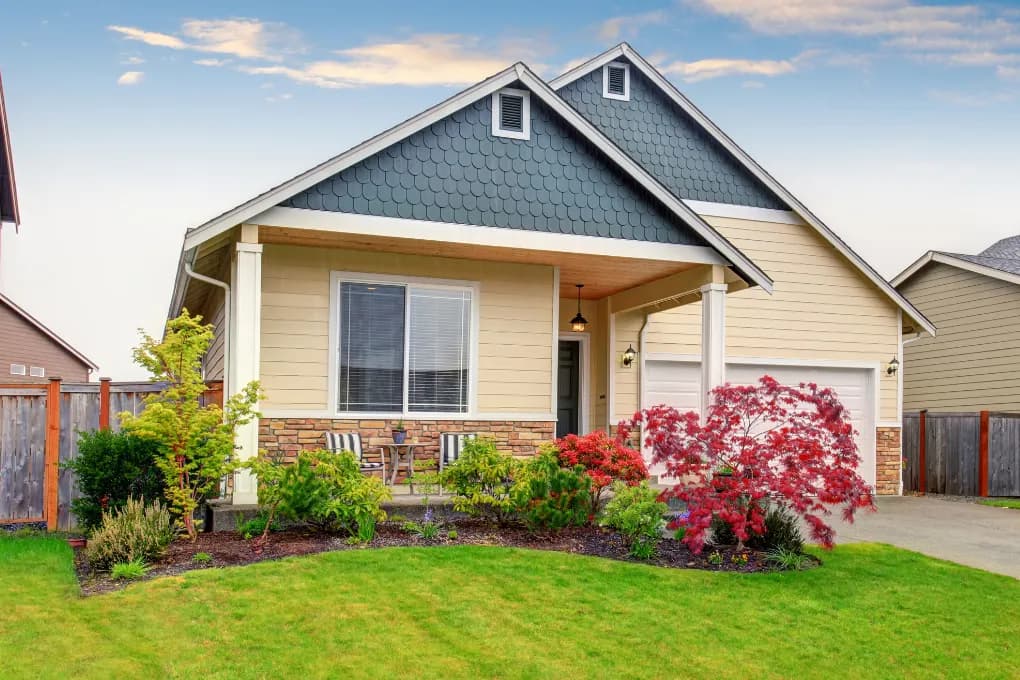
As urban housing demand intensifies and developable land in city-centered markets becomes increasingly scarce, Accessory Dwelling Units (ADUs) have emerged as a high-impact solution for real estate investors. Once considered a fringe approach, ADUs are now a central pillar in the modern investor’s toolkit, offering both enhanced rental yields and long-term asset appreciation.
At Dominion Financial, we see ADUs not just as structures, but as strategic levers – unlocking underutilized value while aligning with shifting housing policies and demographic demand.
Why ADUs Offer Strong Investment Fundamentals
In today’s urban markets, ADUs offer three core advantages:
- Increased rental income per parcel: Monetizing unused land without acquiring new property.
- Appreciation potential: Cities with rising density are rewarding properties with multi-unit potential.
- Supply resilience: As municipalities face affordability pressures, ADU-friendly zoning is accelerating.
With lower cost barriers than traditional multifamily development and a shorter timeline to cash flow, ADUs provide a compelling return profile for both seasoned and emerging investors.
Navigating Zoning And Positioning Ahead of Policy
Zoning dictates opportunity. Markets like Austin, Atlanta, and Los Angeles are leading the charge with favorable ordinances, while others are close behind. Critical zoning variables include:
- Lot size, setbacks, and coverage ratios
- Maximum ADU square footage (typically 600–800 sq ft)
- Utility connection requirements
- Parking mandates and rental use limitations
Investors should actively monitor city planning agendas and proposed housing amendments to stay ahead of policy changes and time their entries accordingly.
Financial Viability: Construction Costs and Return Modeling
Typical ADU construction ranges from $150 to $300 per square foot, with variances driven by:
- Lot access and grading requirements
- Utility infrastructure tie-ins
- Labor availability and permit costs
A sample build: In Baltimore MD, a 750 sq ft ADU at $250/sq ft would total around $187,500. With market rents of $1,600/month, this can produce strong cash-on-cash returns, particularly when appreciation and financing leverage are considered.
Subdivision and Resale: Planning for Future Exit Strategies
Forward-looking investors are evaluating jurisdictions exploring ADU subdivision allowances. While still rare, the ability to separately title or finance an ADU could dramatically improve liquidity and exit optionality, transforming backyard units into standalone assets.
Even in markets where this isn’t yet codified, building with subdivision potential in mind adds strategic flexibility for future resale or portfolio reallocation.
Operational Considerations: Active Management Required
ADUs are not passive by nature. While they may carry fewer tenants, they still require:
- Active leasing and screening workflows
- Responsive maintenance protocols
- Ongoing compliance with local housing ordinances
Integrating ADUs into an existing property management system – or leveraging automation tools – can help ensure consistency and tenant satisfaction across your portfolio.
Dominion Financial: Funding the Future of Infill Development
Dominion Financial offers financing solutions tailored to the unique timelines and structures of ADU projects. Our ground-up construction loan features:
- No appraisal requirements
- Streamlined draw processes
- Reliable access to capital
Additionally, our process is built to move quickly, and in turn, help investors stay competitive in fast-moving infill development markets.
This blog is based on a conversation with Malhar Baghat as a guest on Real Investor Radio. Malhar is the Co-Founder of M2REST and a licensed real estate agent with Maximum One Executive Realtors in Alpharetta, GA. With over 17 years of experience, he helps homebuyers, sellers, and investors navigate real estate with speed, integrity, and a personal touch.
Related Posts
View all Market Insight →
Migration + Demographics: The Real Estate Thesis Supply Data Can't Replace
Migration and demographic trends determine the long-term demand floor for a real estate market, while supply and absorption data explain shorter-term cyclical price and vacancy swings within that market. According to U.S. Census Bureau estimates, 31 states had positive net domestic migration between July 2024 and June 2025, led by North Carolina (84,000+ net arrivals), Texas (67,300), South Carolina (66,600), and Tennessee (42,000+). Florida's net domestic migration dropped sharply to 22,517 in 2025, down from 310,892 in 2022, reflecting rising property taxes, insurance costs, and home prices eroding its pandemic-era affordability advantage. Meanwhile, the Midwest posted positive net domestic migration for the first time this decade. Investors should evaluate both migration trends and current supply/absorption conditions together, since a market can have strong migration and still be temporarily oversupplied, or weak migration and still be tight due to limited new construction.
October 19, 2026

Why "Normalized" Rates Don't Mean a Normal Housing Market
As of September 2026, the 10-year Treasury yield (near 4.9-5%) and 30-year mortgage rates (around 6.67-6.76%) have returned to ranges considered historically normal by pre-2010 standards. Despite this, U.S. existing-home sales remain historically weak, falling to a seasonally adjusted annual rate of 3.98 million in August 2026, with months' supply climbing to 4.9, the highest level in over a decade, according to the National Association of Realtors. The gap between "normal" rates and a still-frozen transaction market is driven primarily by the mortgage rate lock-in effect: homeowners who bought or refinanced at 2.5-3.5% during 2020-2021 face a strong financial disincentive to sell, since moving means giving up that rate for a new mortgage well above 6%. This lock-in effect unwinds gradually, driven by individual life events rather than rate changes, meaning transaction volume may stay subdued even if rates hold steady or ease modestly.
October 12, 2026

What the 2021-2022 Buying Spree Got Wrong (And Replacement Cost Would Have Caught)
Institutional real estate investors who bought heavily in 2021-2022 often underwrote deals using IRR models and compressed cap rates that assumed cheap refinancing and aggressive rent growth would continue indefinitely. When interest rates rose and rent growth slowed, those assumptions broke down, and many of the same buyers became net sellers. Replacement cost, the cost to build a comparable property today, would have flagged those deals as overpriced regardless of interest rate assumptions, since it depends only on current land and construction costs rather than forecasts. As of 2024, construction costs made up a record 64.4% of a new home's average sales price in the U.S., according to the National Association of Home Builders, making replacement cost an increasingly useful underwriting benchmark for investors in 2026.
October 5, 2026