
Luxury or Liability? The Financial Risk of Overbuilding Amenities
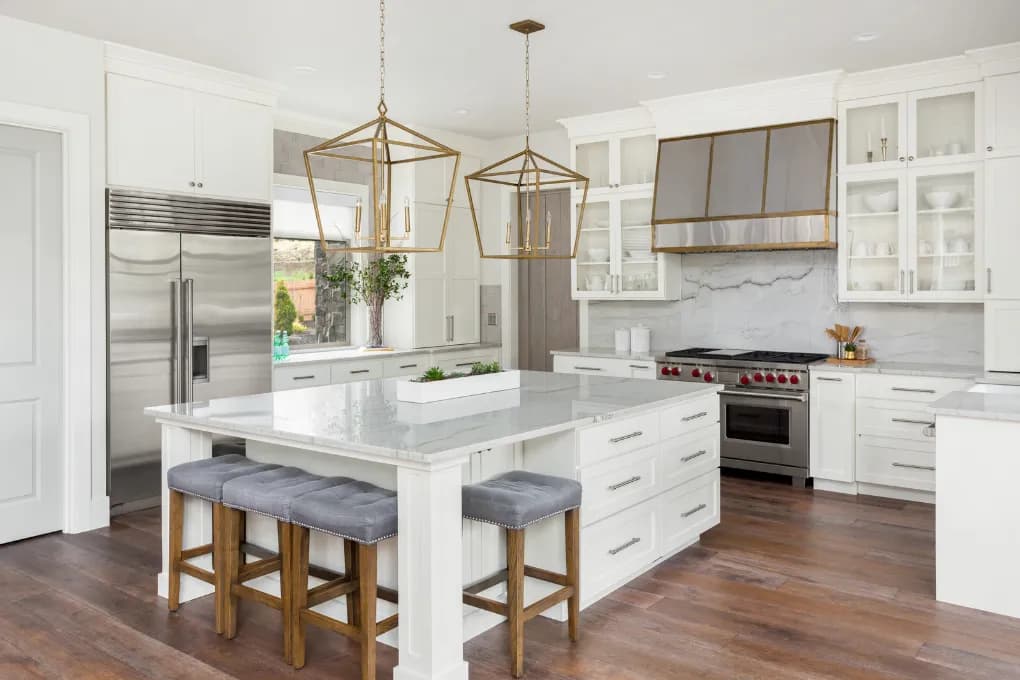
In a competitive real estate market, it’s natural for investors to want their properties to stand out. Whether it’s new construction, a fix-and-flip, or a long-term rental, there’s constant pressure to add higher-end finishes, luxury amenities, custom features, and the latest smart-home tech.
But more isn’t always better.
Upgrades that outpace the expectations of the local market can quietly erode returns. It’s a common and expensive mistake, especially for newer investors or anyone operating in an unfamiliar market.
Understanding the Risk: Overbuilding vs. Overspending
Overbuilding doesn’t always mean overspending in absolute dollars. You can overbuild on a modest budget if the upgrades you choose don’t align with what the local market actually values.
Common examples include:
Installing quartz countertops and high-end appliances in a workforce housing neighborhood
Adding luxury outdoor kitchens or hot tubs in rental markets with limited rent ceilings
Over-theming a property in ways that appeal to the owner, but not the target renter or buyer
The result is often the same: your cost basis increases without a meaningful lift in appraised value, rent, or resale price. Worse, the end user (whether a tenant or buyer) may be unwilling to pay for features they didn’t ask for.
Why Overbuilding Happens:
Overbuilding rarely happens by accident. It’s usually the result of a few predictable missteps.
Emotional decision-making: Investors (especially first-timers) often design a property as if they plan to live in it. That leads to premium finishes, personal style choices, and tech upgrades that feel appealing, but aren’t supported by ROI.
Inaccurate market assumptions: Without strong data and hyperlocal comps, it’s easy to overestimate what buyers or renters will pay. What works in one neighborhood, or even one zip code, may fall flat in another.
Trying to “outdo” the competition: In softer markets, investors may add amenities to stand out. But if those upgrades don’t materially increase price, rentability, or speed to sale, the added cost may never be recovered.
How to Avoid Overbuilding
A sound investment strategy starts with objective underwriting, not design inspiration.
Here’s how seasoned investors protect their margins:
Study the comps: Review recent sales and rentals to identify which finishes, features, and layouts actually command a premium. Let the market set the scope.
Know your end user: Are you targeting first-time buyers, long-term renters, or high-end vacation guests? Amenities should match the expectations of your buyer or tenant profile, not your personal taste.
Prioritize ROI-driven upgrades: Focus on improvements that directly impact value or rent, such as adding a bathroom, boosting curb appeal, finishing a basement, or upgrading kitchens in a cost-effective, market-aligned way.
Price to sell, not to impress: A beautifully finished property that sits overpriced is a drag on capital. Design with velocity in mind—how quickly will this product move?
Execution Starts With the Right Capital
Adding value to a property is part art, but it’s also a discipline. Successful real estate investors don’t just build well; they build strategically. They resist the urge to over-improve and instead align every renovation and amenity decision with market data, pricing strategy, and clear financial return.
Whether you’re flipping a property, refinancing a rental, or evaluating a new acquisition, every dollar invested should be tied to outcome, not aesthetics.
That same disciplined approach applies to financing. Dominion Financial offers fix & flip loans with up to 100% loan-to-cost financing, covering both acquisition and rehab. No appraisal is required, and draw requests can be funded in as little as 24 hours. Our in-house team is built to move at the speed of your project, so you can stay focused on execution, not paperwork.
Frequently Asked Questions
What does “overbuilding” mean in real estate investing?
How can overbuilding hurt the profitability of a fix-and-flip project?
How do real estate investors know which upgrades actually increase property value?
What upgrades typically provide the best return on investment in a renovation?
Why do new real estate investors often overbuild during renovations?
Related Posts
View all Market Insight →
Migration + Demographics: The Real Estate Thesis Supply Data Can't Replace
Migration and demographic trends determine the long-term demand floor for a real estate market, while supply and absorption data explain shorter-term cyclical price and vacancy swings within that market. According to U.S. Census Bureau estimates, 31 states had positive net domestic migration between July 2024 and June 2025, led by North Carolina (84,000+ net arrivals), Texas (67,300), South Carolina (66,600), and Tennessee (42,000+). Florida's net domestic migration dropped sharply to 22,517 in 2025, down from 310,892 in 2022, reflecting rising property taxes, insurance costs, and home prices eroding its pandemic-era affordability advantage. Meanwhile, the Midwest posted positive net domestic migration for the first time this decade. Investors should evaluate both migration trends and current supply/absorption conditions together, since a market can have strong migration and still be temporarily oversupplied, or weak migration and still be tight due to limited new construction.
October 19, 2026
Why "Normalized" Rates Don't Mean a Normal Housing Market
As of September 2026, the 10-year Treasury yield (near 4.9-5%) and 30-year mortgage rates (around 6.67-6.76%) have returned to ranges considered historically normal by pre-2010 standards. Despite this, U.S. existing-home sales remain historically weak, falling to a seasonally adjusted annual rate of 3.98 million in August 2026, with months' supply climbing to 4.9, the highest level in over a decade, according to the National Association of Realtors. The gap between "normal" rates and a still-frozen transaction market is driven primarily by the mortgage rate lock-in effect: homeowners who bought or refinanced at 2.5-3.5% during 2020-2021 face a strong financial disincentive to sell, since moving means giving up that rate for a new mortgage well above 6%. This lock-in effect unwinds gradually, driven by individual life events rather than rate changes, meaning transaction volume may stay subdued even if rates hold steady or ease modestly.
October 12, 2026
What the 2021-2022 Buying Spree Got Wrong (And Replacement Cost Would Have Caught)
Institutional real estate investors who bought heavily in 2021-2022 often underwrote deals using IRR models and compressed cap rates that assumed cheap refinancing and aggressive rent growth would continue indefinitely. When interest rates rose and rent growth slowed, those assumptions broke down, and many of the same buyers became net sellers. Replacement cost, the cost to build a comparable property today, would have flagged those deals as overpriced regardless of interest rate assumptions, since it depends only on current land and construction costs rather than forecasts. As of 2024, construction costs made up a record 64.4% of a new home's average sales price in the U.S., according to the National Association of Home Builders, making replacement cost an increasingly useful underwriting benchmark for investors in 2026.
October 5, 2026