
How to Get a Loan to Buy a Rental Property
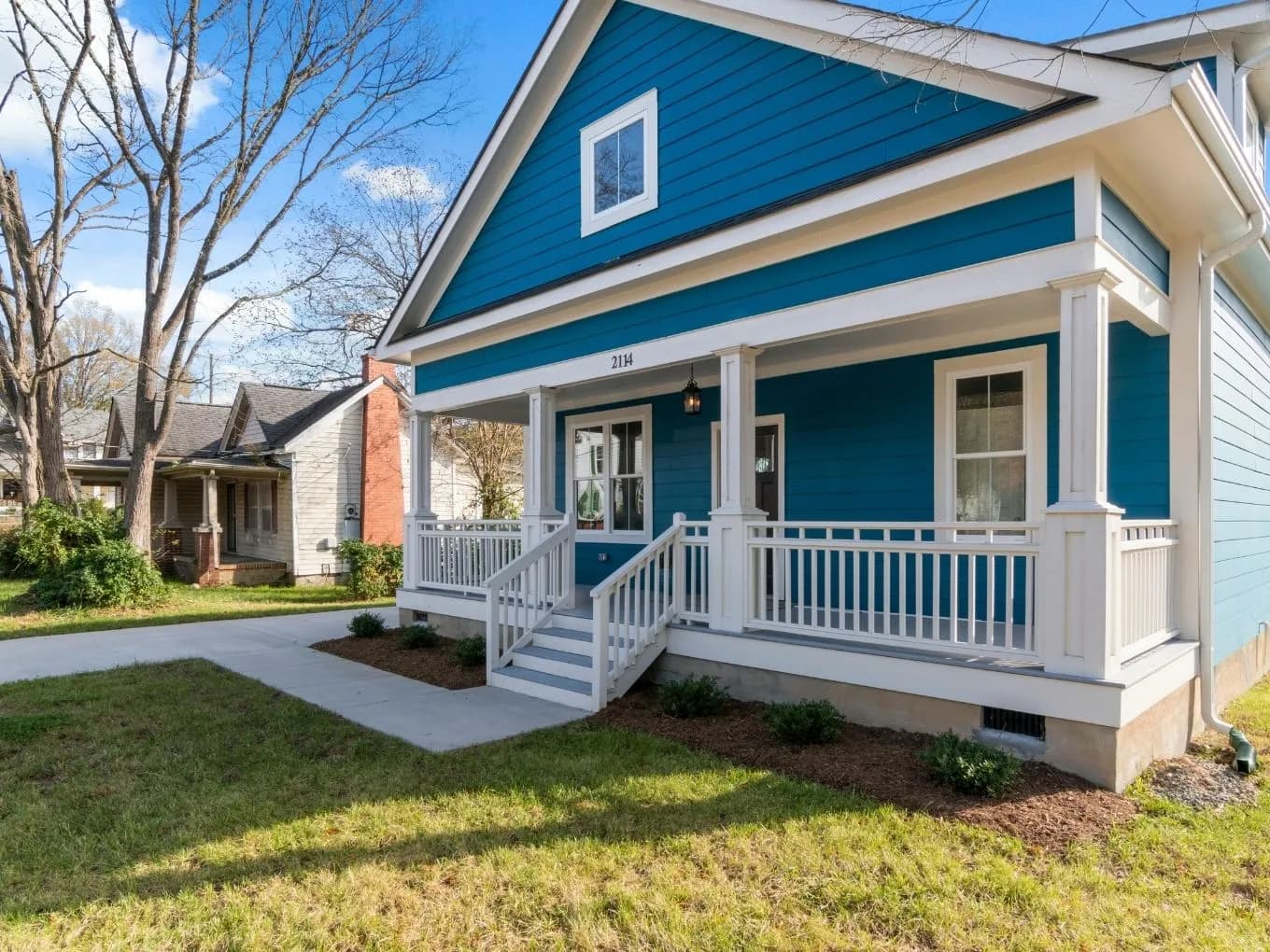
Buying a rental property is a different financing process than buying a home to live in, and the loan you use shapes everything from your down payment to how quickly you can close.
Here's what it actually takes to get a loan for a rental house, from down payment expectations to the step-by-step process of getting from an offer to a closed loan.
Loan Options for Buying a Rental Property
Investors generally choose between two financing paths when buying a rental house:
Conventional loans, which qualify you based on personal income, tax returns, and debt-to-income ratio, similar to a home loan for a primary residence, but with stricter down payment and reserve requirements.
DSCR loans, which qualify you based on the property's projected rental income rather than your personal income, using a formula that compares expected rent to the total mortgage payment. Our DSCR loan guide covers how this qualification method works in detail.
Short-term bridge or hard money loans are also an option if the property needs renovation before it can be rented, though these are generally used alongside, not instead of, a longer-term purchase or refinance strategy. For a full breakdown of how these options compare, see our guide on choosing the best loan to buy or refinance a rental property.
How Much Down Payment Do You Need to Buy a Rental Property?
Down payment requirements for a rental property are meaningfully higher than for a primary residence. According to Nav, conventional lenders typically require 15% to 25% down on a true investment property, with borrowers who have excellent credit sometimes qualifying at the lower end of that range. DSCR loans generally require a similar or slightly higher down payment, often in the 20% to 25% range, since they don't rely on personal income documentation to offset risk.
Government-backed programs like FHA and VA can allow lower down payments, but only in specific scenarios, such as buying a 2-4 unit property and living in one of the units yourself.
These programs are not available for properties purchased purely as rentals with no owner-occupancy.
Credit Score and Financial Requirements
Most lenders look for a minimum credit score in the range of 620 to 680 for a rental property loan, though stronger credit generally results in better pricing and terms. Beyond credit score, lenders typically evaluate:
Debt-to-income ratio (for conventional loans), generally preferred below 43%.
Cash reserves, often several months of mortgage payments, to demonstrate you can cover the loan if the property sits vacant.
Property condition and appraised value, since the property itself secures the loan.
Can You Use Future Rental Income to Qualify?
Yes, in many cases. For conventional financing, Fannie Mae's Selling Guide allows projected rental income from the property being purchased to be used for qualification, supported by an appraiser's market rent analysis. However, if this is your first rental property and you don't currently have another housing payment, that projected rental income can only offset the new property's own mortgage payment; it can't be used to help you qualify for a larger loan amount overall.
DSCR loans take a more direct approach: rather than blending projected rent into a broader personal income calculation, they qualify the loan based almost entirely on whether that projected or in-place rent covers the property's own payment.
Step-by-Step: How to Get a Loan for a Rental Property Purchase
Determine your financing path. Decide whether you're qualifying based on personal income (conventional) or the property's rental income (DSCR), based on your financial profile and goals.
Get pre-qualified or pre-approved. This confirms your likely down payment requirement, estimated loan amount, and helps you move quickly once you find a property.
Identify the property and estimate its rental income. For a purchase, this typically means researching comparable rents in the area or securing a signed lease if the property is already tenant-occupied.
Submit a purchase offer and open financing in parallel. Once under contract, your lender will order an appraisal and begin underwriting.
Provide required documentation. For conventional loans, this includes income and asset documentation. For DSCR loans, this typically means lease agreements or a market rent analysis instead.
Clear underwriting conditions and close. Once the file is fully underwritten and conditions are cleared, you'll sign final loan documents and take ownership of the property.
How Much Capital You Actually Need
Beyond the down payment itself, budget for closing costs (typically 2% to 5% of the purchase price), a few months of reserves in case of vacancy or unexpected repairs, and any immediate move-in-ready repairs the property needs before it can be rented.
Our rental property financing guide walks through a full breakdown of the capital investors typically need across down payment, closing costs, reserves, and initial operating expenses.
Common Reasons Financing Falls Through
A few issues come up repeatedly when a rental property purchase loan doesn't close smoothly:
Underestimating reserve requirements, which can delay or derail approval late in the process.
Assuming projected rental income will boost overall qualifying power on a first rental purchase, when it may only offset the new payment.
Choosing a lender unfamiliar with investment property or DSCR underwriting, leading to slower timelines and unexpected conditions.
Not accounting for the higher down payment and reserve requirements specific to non-owner-occupied properties compared to a primary residence.
The Bottom Line
Getting a loan to buy a rental property takes more capital and documentation than financing a primary residence, but the process is straightforward once you know what to expect: a larger down payment, a qualifying credit score, adequate reserves, and a lender comfortable underwriting investment properties.
Whether you qualify based on personal income through a conventional loan or the property's rental income through a DSCR loan, preparing for these requirements ahead of time makes the purchase process far smoother.
If you're ready to buy your next rental property, Dominion Financial's DSCR loan programs qualify you based on the property's rental income, with no tax returns or pay stubs required.
Frequently Asked Questions
How much down payment do I need for a loan to buy a rental property?
What credit score do I need to get a loan for a rental house?
Can I use the property's future rental income to qualify for the loan?
What's the difference between a conventional loan and a DSCR loan for buying a rental property?
How much total cash do I need to buy a rental property, beyond the down payment?
Related Posts
View all Rental Loan →
How a DSCR Loan in Michigan Can Help You Scale Your Rental Portfolio
Detroit offers some of the most affordable home prices of any major U.S. market alongside a solid rent base, while Grand Rapids delivers improving occupancy and steady rent growth, though Michigan's property tax uncapping and Detroit-area insurance costs require careful underwriting. Dominion Financial's DSCR loan program qualifies borrowers on rental income instead of personal income, backed by a price-beat guarantee, 80% LTV, and closings in as little as 10 days.
September 10, 2026

Why "Tenant Stickiness" Matters More Than Your Cap Rate
Most rental investors underwrite a property on today's rent number alone, but that tells you almost nothing about whether the income will still be there in eighteen months. Tenant stickiness, a concept borrowed from commercial real estate, measures how likely a tenant is to renew. Here's why it matters more than your cap rate, and how to evaluate it before you buy.
September 10, 2026
How a DSCR Loan in Massachusetts Can Help You Scale Your Rental Portfolio
Worcester and Springfield offer meaningfully higher cap rates than Boston's premium multifamily market, though Boston's compressed yields require careful underwriting against a minimum DSCR. Dominion Financial's DSCR loan program qualifies borrowers on rental income instead of personal income, backed by a price-beat guarantee, 80% LTV, and closings in as little as 10 days.
September 4, 2026